Chapter 57: UX, UI and user-centered design
UX, UI, interaction design and product design are four names for overlapping parts of one job: deciding what a digital product does, how it behaves and how it looks. Teams use them loosely, and the looseness costs something. A “UX review” that only checks colors and spacing will miss the problems that send people away.
UX and UI
User experience (UX) is everything a person meets in dealing with a company’s product or service, on the screen and off it. Don Norman and Jakob Nielsen define it as “all aspects of the end-user’s interaction with the company, its services, and its products.”1 ISO 9241-210 puts it from the user’s side: a person’s perceptions and responses that result from using a product, system or service, or from expecting to use it.2 The user interface (UI) is the part of a product a person sees, hears and operates: screens, controls, labels and sounds, and on a physical device, its buttons and dials.
The UI sits inside the UX. Norman and Nielsen’s example is a website of movie reviews. Even if the interface for finding a film is perfect, the experience is poor for someone looking for a small independent release if the database only holds films from the major studios.1 No change to the screens fixes that.
Jesse James Garrett drew the relationship as five planes stacked from abstract to concrete: strategy, scope, structure, skeleton and surface. His book gives the skeleton plane to interface, navigation and information design, and the surface plane to visual design.3 UI work lives mostly in those top two. Where the term “user experience” came from is told in → 2 The design disciplines.
Product design and interaction design
Interaction design is the design of how people and a system act on each other over time: what a person can do, how the system replies, and what happens next. Its material is behavior more than appearance. The design educator Gillian Crampton Smith described interaction design as a language with four dimensions: words, visual representations, physical objects or space, and time. Kevin Silver, an interaction designer, later added a fifth, behavior.4 A checkout that keeps a half-filled form when the network drops is interaction design; the color of its Pay button is visual interface design (→ 64 Visual interface design).
A product designer, in a software company, is a designer who owns one product or feature from problem to shipped screen: research, flows, interaction, UI and often a share of product strategy (→ 83 Product strategy). The title describes a scope of responsibility more than a separate skill. Outside software it means an industrial designer (→ 42 Product and industrial design). When you read a job ad, trust the list of tasks over the title.
Principles of user-centered design
User-centered design (UCD) is a way of developing a product in which the people who will use it shape the design from the start, through research, testing and repeated revision. The phrase is in the title of a 1986 book edited by Don Norman and Stephen Draper, User Centered System Design.5 A year earlier, John Gould and Clayton Lewis had set out three principles in Communications of the ACM: early and continual focus on users; empirical measurement of usage; and iterative design, in which the system is “modified, tested, modified again, tested again,” and the cycle repeats.6 They also reported that the principles were not always intuitive to designers, and answered the reasons designers gave for skipping them.
Gould and colleagues put the principles to work on the 1984 Olympic Message System, a multilingual messaging service that kept more than 10,000 athletes and officials at the Los Angeles Games in touch with family and friends.7 ISO 9241-210 later expanded the list to six principles under the name human-centered design. They are set out in → 3 Design processes, along with the difference between the two names.
In practice:
- Watch people use the product. Asking them what they want is a different and weaker method (→ 52 Interviews, observation and contextual inquiry).
- Decide what you’ll measure, such as task success, time and errors, before the design is built (→ 53 Usability testing).
- Plan more than one round of testing before launch, and leave time to change the design after each.
Co-design
Co-design is designers and people without design training creating together across the whole design process. Elizabeth Sanders and Pieter Jan Stappers, writing in 2008, defined it as one kind of co-creation, which is any act of collective creativity.8 They set it against user-centered design. There, the user is a subject: studied, interviewed and asked to react to concepts that others made. In co-design the user is a partner, treated as the “expert of his/her experience” and given tools for generating ideas.8
The older name is participatory design, which Sanders and Stappers trace to Scandinavian projects of the 1970s.8 The best known is UTOPIA, which ran from 1981 to 1985. Swedish and Danish researchers worked with the Nordic Graphic Workers’ Union on computer page makeup and image processing for newspapers.910 Skilled graphic workers tried out the new tools in a mock-up “technology laboratory” of cardboard boxes, paper labels and slide projections, working as if the systems already existed. The newspapers Aftonbladet in Sweden and Information in Denmark took part.10 The project produced a working system, TIPS, which was tested at several newspapers.9
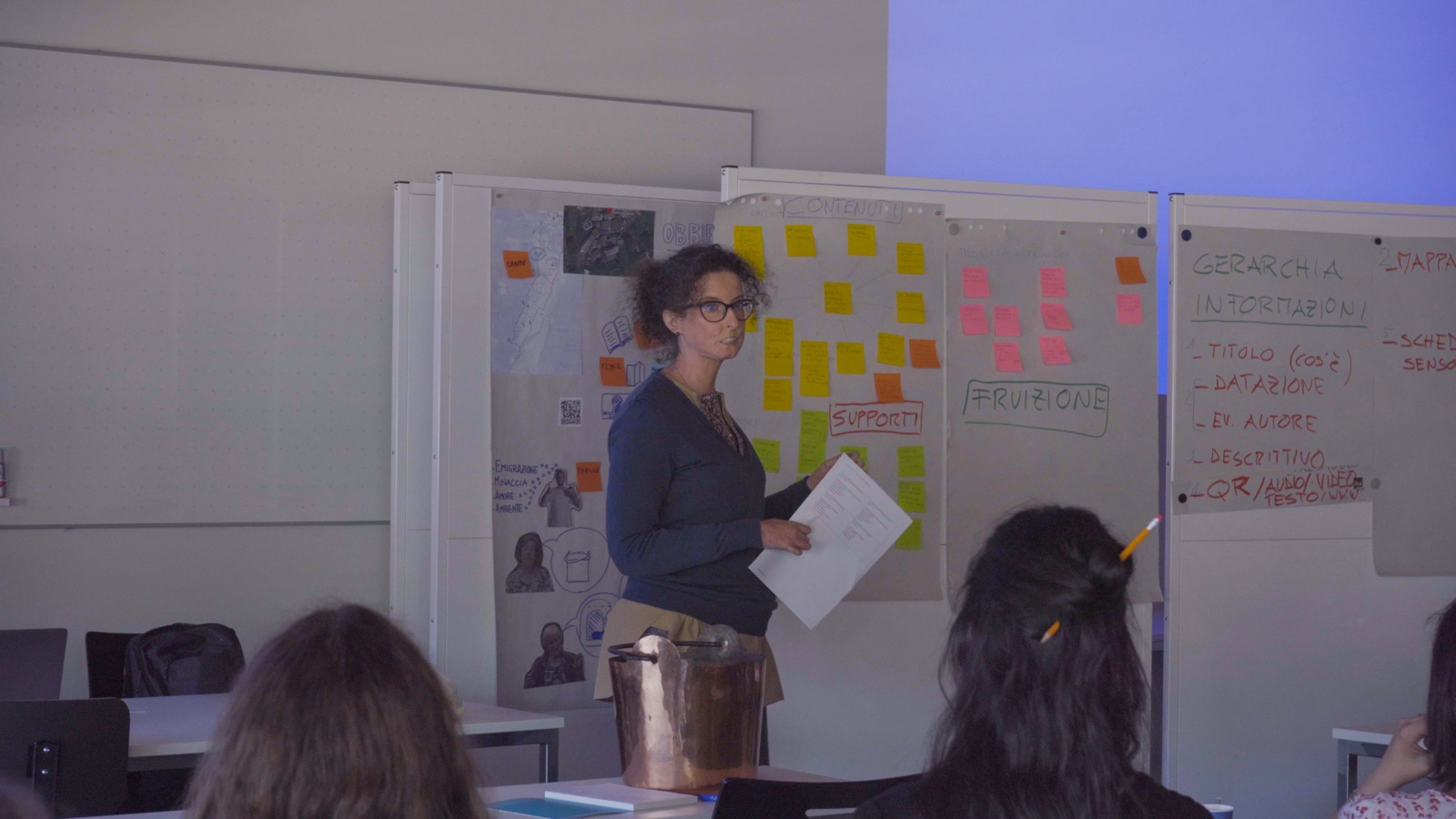
Max Fonseca and Martin Franze / Project PATI / SUPSI, CC BY-SA 4.0, via Wikimedia Commons.
The disability rights movement put the same principle in a slogan, which James Charlton used as the title of his 1998 book: Nothing About Us Without Us.11 Co-design takes longer than testing a finished prototype. It needs facilitation, payment for participants’ time and a real share in decisions. A workshop whose results nobody acts on is consultation with extra sticky notes (→ 49 Accessibility and inclusive design).
See also
2 The design disciplines · 3 Design processes · 45 Human-computer interaction: history and theory · 52 Interviews, observation and contextual inquiry · 53 Usability testing · 55 Personas, journeys and service design
Sources
- Charlton, J. I. (1998). Nothing About Us Without Us: Disability Oppression and Empowerment. University of California Press.
- Garrett, J. J. (2002). The Elements of User Experience: User-Centered Design for the Web. New Riders.
- Göransdotter, M. (2024). “Technology, Democracy and Utopia: Scandinavian Participatory Design in the Making.” Bauhaus 4.
- Gould, J. D., and Lewis, C. (1985). “Designing for usability: key principles and what designers think.” Communications of the ACM 28(3): 300–311.
- Gould, J. D., Boies, S. J., Levy, S., Richards, J. T., and Schoonard, J. (1987). “The 1984 Olympic Message System: a test of behavioral principles of system design.” Communications of the ACM 30(9).
- ISO (2010). ISO 9241-210:2010, Ergonomics of human-system interaction, Part 210: Human-centred design for interactive systems.
- Kuhn, S., and Winograd, T. (1996). “Participatory Design.” In Winograd, T. (ed.), Bringing Design to Software. Addison-Wesley.
- Norman, D., and Nielsen, J. (1998). “The Definition of User Experience (UX).” Nielsen Norman Group.
- Norman, D. A., and Draper, S. W. (eds.) (1986). User Centered System Design. Lawrence Erlbaum.
- Sanders, E. B.-N., and Stappers, P. J. (2008). “Co-creation and the new landscapes of design.” CoDesign 4(1): 5–18.
- Teo, Y. S. (2015). “What is Interaction Design?” Interaction Design Foundation.
Notes
- Norman, D., and Nielsen, J. (1998). “The Definition of User Experience (UX).” Nielsen Norman Group. https://www.nngroup.com/articles/definition-user-experience/ ↩ ↩
- ISO 9241-210:2010, Human-centred design for interactive systems, definition of user experience, as quoted by All About UX (Aalto University and others), “User experience definitions.” https://experience.aalto.fi/?p=6664 ↩
- Garrett, J. J. (2002). The Elements of User Experience: User-Centered Design for the Web. New Riders. Chapters 3–7. Publisher’s listing: https://www.peachpit.com/store/elements-of-user-experience-user-centered-design-for-9780735712027 ↩
- Teo, Y. S. (2015, updated). “What is Interaction Design?” Interaction Design Foundation. https://ixdf.org/literature/article/what-is-interaction-design ↩
- Norman, D. A., and Draper, S. W. (eds.) (1986). User Centered System Design: New Perspectives on Human-Computer Interaction. Lawrence Erlbaum. https://www.nngroup.com/books/user-centered-system-design/ ↩
- Gould, J. D., and Lewis, C. (1985). “Designing for usability: key principles and what designers think.” Communications of the ACM 28(3): 300–311. Abstract. https://doi.org/10.1145/3166.3170 ↩
- Gould, J. D., Boies, S. J., Levy, S., Richards, J. T., and Schoonard, J. (1987). “The 1984 Olympic Message System: a test of behavioral principles of system design.” Communications of the ACM 30(9). https://doi.org/10.1145/30401.30402 ↩
- Sanders, E. B.-N., and Stappers, P. J. (2008). “Co-creation and the new landscapes of design.” CoDesign 4(1): 5–18. https://doi.org/10.1080/15710880701875068 ↩ ↩ ↩
- Kuhn, S., and Winograd, T. (1996). “Participatory Design.” Profile in Winograd, T. (ed.), Bringing Design to Software. Addison-Wesley. https://hci.stanford.edu/publications/bds/14-p-partic.html ↩ ↩
- Göransdotter, M. (2024, December 15). “Technology, Democracy and Utopia: Scandinavian Participatory Design in the Making.” Bauhaus journal, issue 4. https://atlas-mobile.bauhaus-dessau.de/en/journal/pedagogies-of-machine-learning/technology-democracy-and-utopia-scandinavian-participatory-design-in-the-making ↩ ↩
- Charlton, J. I. (1998). Nothing About Us Without Us: Disability Oppression and Empowerment. University of California Press. https://www.ucpress.edu/books/nothing-about-us-without-us/epub-pdf ↩